

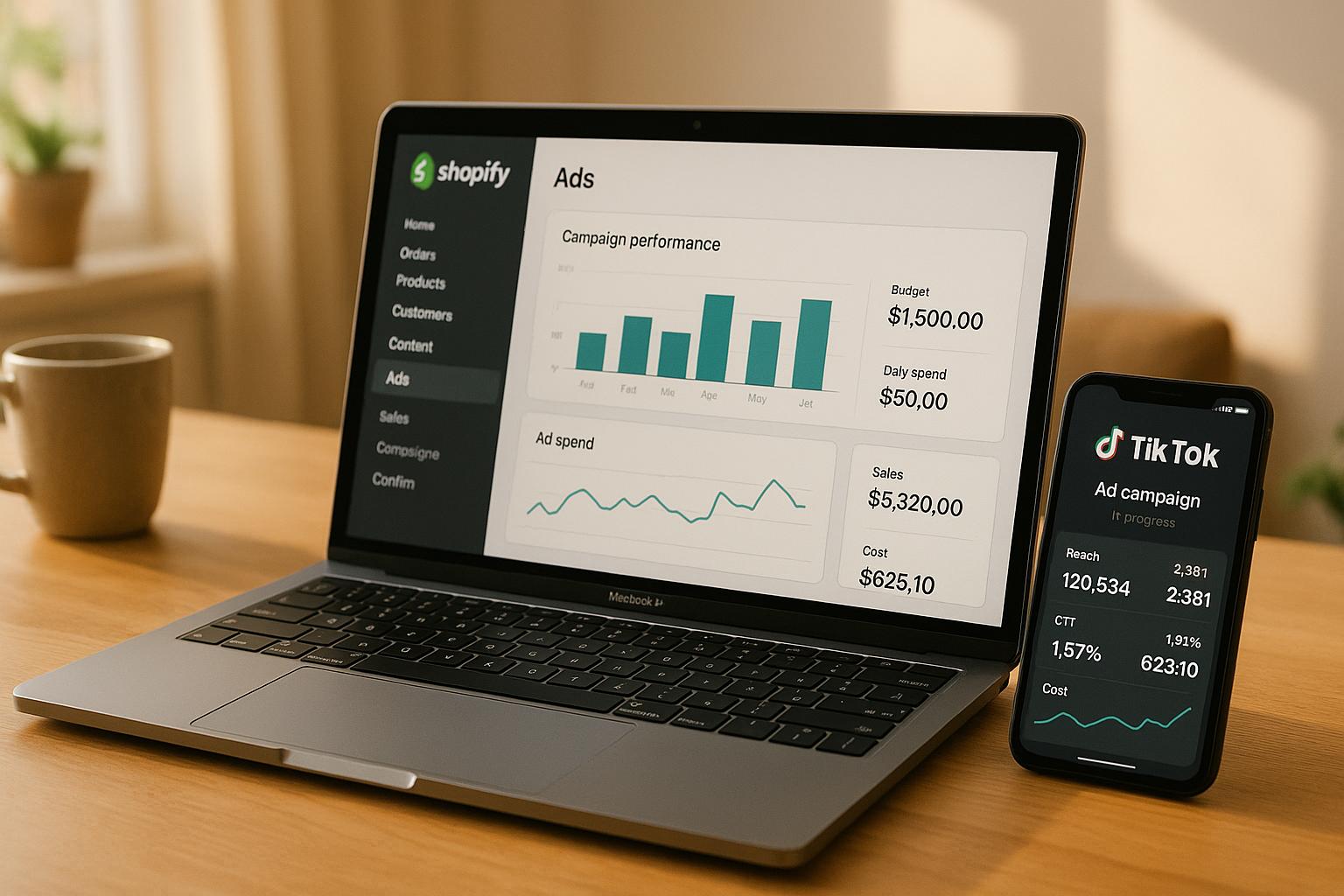
Struggling to budget for TikTok ads? Here's the deal: TikTok is great for younger audiences and trend-driven shopping. But it’s not the only platform you should focus on. To get the best results, Shopify merchants need a balanced approach across TikTok, Meta (Facebook/Instagram), Google, Pinterest, and YouTube.
Key Takeaways:
- TikTok Ads: Best for Gen Z and Millennials. Costs range from $0.50–$2.00 per click, with CPMs between $6–$15. Allocate 30–40% of seasonal budgets here for trends and last-minute campaigns.
- Meta Ads: A reliable option for diverse audiences and strong retargeting. CPM and CPC costs rise during peak seasons but offer higher average order values.
- Google Ads: Ideal for high-intent shoppers. Pay-per-click costs vary by keyword demand, making it perfect for direct sales during key shopping periods.
- Pinterest Ads: Targets planners, especially women 25–45. Pins have a long lifespan, making them effective for early seasonal campaigns.
- YouTube Ads: Leverages video storytelling to engage broader audiences. Costs range from $0.10–$0.30 per view or action.
Quick Tip:
Seasonal campaigns often require upfront investments. Tools like Onramp Funds help Shopify merchants manage cash flow by offering flexible, revenue-based financing. This ensures you can scale TikTok ads (or others) without breaking the bank.
Bottom Line: Diversify your ad spend. Use TikTok for discovery, Meta for conversions, Google for intent-driven buyers, Pinterest for planners, and YouTube for storytelling. Balance creativity with performance tracking to maximize ROI.
Best Low Budget TikTok Ads Strategy | Shopify
1. TikTok Ads
TikTok's ad platform offers Shopify merchants a chance to connect with younger audiences through its algorithm-driven feed. Ads on TikTok blend seamlessly into the user experience, making it an ideal space for brands that can showcase products visually.
Cost Structure
TikTok operates on an auction-based pricing model, with a minimum daily budget of $20 for campaigns and ad groups. For Shopify merchants, cost-per-click (CPC) generally falls between $0.50 and $2.00, though this can vary based on targeting and competition.
The platform supports several bidding models, including CPM, CPC, and CPA. CPM rates typically range from $6 to $15 for most e-commerce categories. A unique advantage of TikTok is its potential for organic reach - ads that perform well can gain additional visibility, lowering the overall cost per impression.
However, costs can spike during peak shopping seasons like Black Friday or back-to-school sales. During these times, CPCs may rise by 40-60%, making early planning essential for merchants aiming to maximize seasonal opportunities.
Performance Metrics
TikTok campaigns often deliver strong engagement, with an average click-through rate (CTR) of 1.5%–3% and over 60% video completion rates. The platform's full-screen, sound-on format plays a big role in keeping users engaged.
Using TikTok Pixel for conversion tracking, Shopify merchants typically see conversion rates between 2% and 4%, depending on the product type and targeting. Fashion and beauty brands often achieve higher conversion rates, while categories like electronics and home goods may require more time for customers to make a decision.
While TikTok's average order value (AOV) tends to be lower than Google Ads, it’s comparable to other social platforms. This reflects the spending habits of TikTok’s younger audience. That said, customers acquired through TikTok often demonstrate strong brand loyalty, which can lead to higher lifetime value.
Seasonal Budgeting
TikTok’s fast-moving, trend-driven nature requires merchants to be flexible with their budgets. During high-engagement periods like summer fashion launches or holiday campaigns, many merchants allocate 30-40% of their seasonal ad spend to TikTok.
To optimize ad delivery, allow for a 3–7 day learning phase with consistent daily budgets. For testing, merchants typically start with $200–500 per week before scaling up successful campaigns.
Because TikTok ad performance often declines after 7–10 days, merchants should plan to refresh their creative assets regularly. Successful campaigns usually allocate an extra 20-30% of the budget for creative production and testing.
Target Audience Strengths
TikTok excels at reaching Gen Z and younger Millennials, with 60% of its users aged 16–34. This group wields considerable purchasing power and often sets broader consumer trends. For Shopify merchants in categories like fashion, beauty, tech accessories, or lifestyle products, TikTok offers direct access to trend-savvy shoppers.
Unlike platforms like Google Ads, TikTok thrives on discovery-based shopping. Users often stumble upon products organically through entertaining content, making it a great tool for building brand awareness and introducing new products.
TikTok’s geographic targeting is particularly effective in urban and suburban areas across the U.S., while its interest-based targeting helps merchants connect with niche communities and emerging micro-trends. These features make it easier to attract high-quality traffic to Shopify stores.
The platform’s social proof mechanisms - likes, shares, and comments - play a critical role in driving conversions. Products that gain momentum on TikTok often experience viral growth, leading to significant sales spikes. This highlights the importance of flexible, seasonally adjusted ad strategies to capitalize on TikTok’s unique audience behaviors.
2. Meta Ads (Facebook/Instagram)

Meta's advertising ecosystem, encompassing Facebook and Instagram, provides Shopify merchants with a stable and data-driven alternative to TikTok's dynamic style. With its mature infrastructure and extensive user data, Meta excels at both building brand awareness and driving direct conversions. Its broad demographic appeal makes it a go-to platform for businesses targeting diverse audiences.
Cost Structure
Meta operates on a competitive auction system, allowing advertisers to set flexible daily budgets. Costs, including cost-per-click (CPC) and cost-per-thousand impressions (CPM), fluctuate based on audience targeting and seasonal demand. During high-demand periods like Black Friday, these costs tend to rise. Meta's Advantage+ Shopping campaigns use automated bidding to help manage expenses, although they may lead to slightly higher CPCs.
Performance Metrics
Meta consistently delivers solid results for Shopify merchants. While outcomes depend on the quality of ad creatives and audience targeting, the platform is known for strong engagement rates. Tools like Facebook Pixel and Conversions API provide detailed insights, even with iOS privacy updates. Meta also stands out for generating higher average order values, and its retargeting campaigns often yield impressive returns on ad spend.
Seasonal Budgeting
Meta's predictable seasonal patterns make it easier for Shopify merchants to plan their advertising budgets. The platform’s wide reach and reliability lead many businesses to allocate a significant portion of their seasonal ad spend here. Campaigns benefit from a short learning phase, and successful ads can perform well for extended periods before requiring updates. For seasonal campaigns, gradually increasing budgets helps maintain performance, while setting aside funds for creative testing ensures ad content stays fresh and engaging.
Target Audience Strengths
Meta’s audience spans a wide range of age groups, with strong engagement among Millennials and Gen X. These groups often have higher disposable incomes, making Meta particularly effective for promoting higher-priced products or purchases that require more consideration. Advanced interest-based targeting and lookalike audiences typically outperform campaigns aimed at entirely new audiences. Meta also offers robust geographic targeting and international reach, making it a valuable tool for global campaigns. Additionally, its integration of social proof elements - such as likes, comments, and shares - on both Facebook and Instagram enhances engagement and helps reduce ad costs. This combination of features makes Meta a key component of any well-rounded seasonal ad strategy.
3. Google Ads
Google Ads stands out as a top-tier search advertising platform, offering Shopify merchants a unique opportunity to connect with consumers who are actively searching for products. Unlike platforms like TikTok or Meta, where users often scroll aimlessly, Google Ads focuses on users with clear purchase intent. This makes it especially effective for direct-response campaigns and seasonal promotions. Its ability to target shoppers ready to buy sets it apart and plays a crucial role in understanding its costs and performance.
Cost Structure
Google Ads operates on a pay-per-click model, where advertisers bid on keywords relevant to their products. The platform determines costs using a quality score, which evaluates factors like ad relevance, the landing page experience, and the expected click-through rate (CTR). Shopping campaigns can sometimes be more affordable than traditional search ads, particularly during periods of low competition. However, costs tend to rise during peak shopping seasons when competition intensifies. Tools like automated bidding - such as Smart Shopping and Target ROAS - help advertisers navigate these fluctuations and align spending with performance goals.
Performance Metrics
One of the platform's strengths is its precise conversion tracking and integration with shopping features. For instance, Google Shopping allows product listings to showcase images, prices, and ratings directly in search results, creating a seamless shopping experience. Performance Max campaigns take this further by using machine learning to optimize ad delivery across Google’s ecosystem, including search, shopping, YouTube, and display. These campaigns continuously gather data and adapt, ensuring improved performance over time. Such metrics are invaluable for fine-tuning budgets, especially during high-demand shopping periods.
Seasonal Budgeting
For seasonal campaigns, careful budget planning is critical. Gradually increasing budgets ahead of major shopping events allows Google’s algorithms to adjust and maintain campaign momentum. Shared budgets can help automatically distribute spending across multiple campaigns, while separating branded and non-branded campaigns ensures more efficient budget allocation.
Target Audience Strengths
Google Ads excels at connecting with a broad range of consumers, particularly those who are ready to make a purchase. Its precise keyword targeting enables merchants to tailor ads for both general and highly specific product searches. Local campaigns are another valuable feature, driving both online sales and in-store visits. Additionally, integration with Google Merchant Center supports dynamic remarketing, allowing merchants to re-engage users who’ve previously interacted with their products. This capability makes it an effective tool for maximizing the impact of seasonal promotions.
4. Pinterest Ads
Pinterest offers a unique combination of social discovery and shopping intent, making it a standout platform for Shopify merchants. Unlike platforms where users passively consume content, Pinterest users actively search for ideas and products, often with the intent to purchase. This makes it a fantastic space for merchants selling lifestyle goods, home decor, fashion, or seasonal products. Its mix of visual inspiration and shopping potential creates a compelling opportunity for advertisers.
Cost Structure
Pinterest uses a cost-per-click (CPC) and cost-per-impression (CPM) pricing model. Ads are placed through an auction system that evaluates factors like bid amount, ad quality, and relevance. For merchants, this means ad placement is directly tied to both the competitiveness of their bid and the quality of their content.
Shopping ads on Pinterest integrate seamlessly with product catalogs, allowing for dynamic updates to pricing and inventory. Budgets can be set at both the campaign and ad group levels, with daily limits starting as low as $1.00. Automated bidding tools are available to help optimize for conversions while keeping costs manageable. However, during peak shopping seasons, ad costs may increase, so it’s wise to adjust bids in line with real-time inventory and demand.
Performance Metrics
One of Pinterest’s standout features is the long lifespan of its pins. Unlike other platforms where ads quickly fade, Pinterest Pins can continue to engage users weeks - or even months - after being published. This extended engagement window means that your ad spend can deliver value long after the campaign's initial push.
Conversion tracking is made easy through the Pinterest tag, which integrates directly with Shopify. This allows merchants to track key actions, from page visits to completed purchases. Features like Product Rich Pins enhance engagement by displaying real-time pricing, availability, and product details directly within the pin. With Shopify integration, ads automatically reflect up-to-date inventory and pricing, ensuring accuracy.
Seasonal Budgeting
Pinterest’s extended pin lifespan is a game-changer for seasonal campaigns. Since users often plan purchases well in advance, launching campaigns early can be highly effective. Pinterest’s trend insights can also help merchants identify emerging topics and determine the best times to roll out their ads.
Budget pacing on Pinterest differs from other platforms. Instead of concentrating spending during peak periods, merchants often see better results by maintaining steady budgets in the lead-up to key shopping windows, then scaling up during high-conversion periods. Promoted Video Pins, which tend to drive higher engagement, may require a larger budget but can deliver strong results during seasonal campaigns.
Target Audience Strengths
Pinterest excels at reaching users in the planning and consideration stages of their shopping journey. Its audience is predominantly female - around 60% - and this group wields considerable purchasing power, often influencing major household buying decisions. Interest-based targeting allows advertisers to connect with users based on their boards, pins, and search behavior, enabling precise segmentation.
For broader reach, lookalike audiences can help target users with similar shopping habits. Keyword targeting is another powerful tool, capturing users actively searching for specific products or ideas. Shopping spotlights, which showcase multiple products in a single ad, are another effective way to engage users. Additionally, Pinterest’s audience insights provide valuable data on emerging trends, helping merchants fine-tune their targeting strategies for maximum impact.
sbb-itb-d7b5115
5. YouTube Ads
YouTube, the second-largest search engine in the world, offers Shopify merchants a powerful platform to connect with millions of users through video content. With over 2 billion logged-in users every month, YouTube provides brands with an incredible opportunity to engage potential customers at every stage of their shopping journey - from initial discovery to purchase consideration.
Cost Structure
YouTube's pricing is flexible, typically ranging from 10¢ to 30¢ per view or action. You only pay when users engage with your ads, thanks to various ad formats like in-feed video ads, which charge based on specific actions. Plus, you can easily adjust your daily budget using Google's automated bidding tools, giving you control over your spending.
For discovery ads, pricing depends on your budget and bidding approach. Beyond its cost flexibility, YouTube also provides detailed performance insights to help you measure the impact of your campaigns.
Performance Metrics
With the Google & YouTube app, Shopify merchants can seamlessly track performance metrics like conversions. Conversion tracking monitors user actions such as purchases, add-to-cart events, and checkout initiations, offering a clear picture of how your video campaigns drive sales.
YouTube also tracks key engagement metrics. For example, video viewership highlights brand awareness, while click-through rates reveal how effectively your ads are driving traffic to your Shopify store. Enhanced conversion tracking further improves accuracy, helping you refine your bidding strategies for better results. To ensure your tracking setup is working correctly, tools like Google Tag Assistant can verify data accuracy, making optimization even easier.
Seasonal Budgeting
YouTube’s video format is particularly effective for seasonal campaigns, where storytelling and emotional engagement can influence buying decisions. During peak shopping periods, educational and informative videos can make a big impact - especially since 86% of U.S. viewers turn to YouTube to learn new things. By consistently engaging your audience, you can build momentum leading up to seasonal peaks and maximize your campaign’s effectiveness.
Target Audience Strengths
One of YouTube’s standout features is its robust targeting capabilities, backed by Google’s extensive data ecosystem. You can reach users based on their search history, interests, and viewing behavior. For instance, interest-based targeting lets you connect with people actively watching content related to your products. Additionally, lookalike and demographic targeting help you reach audiences similar to your existing customers. These powerful tools make YouTube an excellent platform for promoting seasonal or complex products to the right audience at the right time.
Platform Advantages and Disadvantages
When planning seasonal campaigns, understanding the strengths and weaknesses of each advertising platform is crucial. This knowledge helps Shopify merchants allocate their marketing budgets effectively to achieve the best results.
TikTok is a powerhouse for reaching younger audiences with engaging, viral-style video content. Its algorithm prioritizes authentic and creative videos over polished advertisements, making it an ideal space for brands that can produce trendy, entertaining material. However, TikTok's audience leans heavily toward Gen Z and younger millennials, which may not suit every brand's target market. Additionally, the platform requires frequent updates to creative content, as performance can be inconsistent.
Meta Ads (Facebook and Instagram) stand out for their robust targeting options and in-depth analytics. With a mature advertising ecosystem, Meta offers a wide variety of creative formats, such as carousel ads and shopping tags, making it highly versatile for different campaign objectives. The ability to reach users across Facebook, Instagram, and Messenger simultaneously is another plus. On the downside, growing competition has driven up costs, and declining organic reach means brands must rely more on paid promotions.
Google Ads is perfect for capturing users with high purchase intent. When people actively search for products or solutions, they are more likely to convert, making Google Ads especially effective for direct-response campaigns. Features like shopping ads that display product images and prices directly in search results further enhance its appeal. However, competitive keywords can lead to higher costs, which may strain budgets.
Pinterest Ads excel for brands in lifestyle, home decor, fashion, and food industries. The platform attracts users seeking inspiration and planning ideas, and its audience often saves and revisits content before making purchases, encouraging long-term engagement. Pinterest's visual focus makes it ideal for showcasing products in aspirational settings. The drawback is its narrower audience compared to other platforms, which may limit its effectiveness for certain product categories.
YouTube Ads leverage video storytelling to build brand awareness and showcase products. As part of Google's advertising network, YouTube offers strong targeting and measurement tools. Its diverse ad formats, from skippable videos to product showcases, provide flexibility for various campaign goals. However, producing high-quality video content can be expensive, and capturing viewer attention requires compelling storytelling.
| Platform | Cost Efficiency | Audience Reach | Targeting Precision | Content Creativity | Best for Seasonal Campaigns |
|---|---|---|---|---|---|
| TikTok | High (low CPM) | Gen Z/Millennials | Moderate | High | Trend-based products |
| Meta Ads | Moderate | Broad demographics | Excellent | Moderate | Established brands |
| Google Ads | Variable | Intent-driven users | Excellent | Low | Direct sales |
| High | Women 25-45 | Good | High | Lifestyle products | |
| YouTube | Moderate | Broad demographics | Excellent | High | Brand storytelling |
This table provides a clear snapshot of the trade-offs for each platform, helping merchants prioritize their budgets based on campaign goals.
For example, brands selling trendy fashion items might find TikTok's viral potential invaluable during back-to-school season, while home decor companies could take advantage of Pinterest's audience for holiday decorating campaigns. Meanwhile, Google Ads is a strong choice for capturing bottom-funnel traffic ready to make a purchase, and platforms like TikTok and Pinterest shine for top-funnel awareness and consideration.
Ultimately, a multi-platform approach often yields the best results. By analyzing seasonal trends and past performance data, Shopify merchants can fine-tune their budget distribution to align with their product offerings, target audience, and campaign objectives.
Funding Seasonal Ad Budgets with Onramp Funds
Seasonal TikTok campaigns, especially during peak times like Black Friday or back-to-school, often require significant upfront investment. For Shopify merchants, this can put a strain on cash flow. That’s where revenue-based financing comes into play, and Onramp Funds offers a solution tailored to support your seasonal ad strategy.
Onramp Funds provides equity-free, revenue-based financing specifically for Shopify merchants. Instead of fixed payments, repayments are tied to your monthly sales, creating a more flexible way to manage cash flow during high-demand periods.
With Onramp Funds, you can access funding in as little as 24 hours. This rapid turnaround allows you to scale your TikTok ad budgets quickly, especially when trends emerge. For TikTok campaigns, merchants typically need monthly budgets ranging from $1,000–$3,000 for testing and $5,000–$10,000 for full-scale launches. Having immediate access to working capital is essential for both phases, as TikTok advertising often requires substantial minimum budgets to see meaningful results.
Shopify’s direct integration with TikTok adds another layer of convenience. Onramp Funds uses your eCommerce data to align funding with your campaign performance, ensuring your capital needs match your advertising goals.
No equity; no fixed payments - just flexible growth capital.
Revenue-based financing allows you to maintain full ownership of your business. Repayments are capped between 1.2 and three times the initial loan, with remit rates ranging from 1%–25% of revenue. Onramp Funds supports merchants with at least $10,000 in monthly sales and offers funding up to $2 million. This makes it a valuable resource for both emerging brands and established businesses looking to maximize seasonal opportunities.
Beyond just TikTok, Onramp Funds supports multi-channel ad strategies, including campaigns on Meta Ads and Google Ads. The funding can also cover essential campaign elements like creative production, influencer collaborations, and A/B testing - key components for driving impactful results. Merchants can easily reallocate budgets across platforms based on real-time performance data, shifting from TikTok to Meta Ads or Google Ads as needed.
As seasonal ad campaigns grow more complex, flexible financing like what Onramp Funds offers becomes indispensable. The revenue-based financing market is expected to surge from $6.4 billion in 2023 to $178.3 billion by 2033, highlighting its importance for eCommerce businesses navigating seasonal demand.
Conclusion
TikTok ads present a unique chance for Shopify merchants, especially during seasonal campaigns. The platform excels in engaging younger audiences and driving high levels of interaction. However, success on TikTok demands thoughtful budget management and tempered expectations when compared to more established options like Google Ads or Meta Ads.
What sets TikTok apart is its potential for viral reach and its variety of ad formats. Its algorithm is designed to amplify content that clicks with viewers, making it an appealing choice for brands that excel in creating authentic, engaging video content. That said, merchants should be prepared for higher customer acquisition costs and longer optimization periods compared to intent-driven platforms.
Navigating this dynamic advertising space requires striking a balance. Instead of relying solely on TikTok, consider a diversified strategy. Use TikTok to experiment with creative campaigns and build brand awareness, while allocating more of your budget to tried-and-true channels that consistently deliver direct conversions. Platforms like Meta Ads, Pinterest, or YouTube can complement your efforts by supporting retargeting and running specialized campaigns.
Seasonal cash flow challenges can add another layer of complexity. This is where revenue-based financing, like what Onramp Funds offers, becomes invaluable. Such funding provides quick access to capital that scales with your sales performance, allowing you to invest in advertising without waiting for seasonal revenue cycles. It’s a practical way to keep campaigns running and seize time-sensitive opportunities without straining your working capital.
Ultimately, scaling campaigns effectively requires both strategic planning and sufficient resources. While Shopify's integration with TikTok simplifies campaign management, long-term success depends on having the capital to test, refine, and expand your campaigns. Combining TikTok’s creative advantages for brand awareness with platforms focused on conversions can help you achieve sustainable growth while maintaining financial flexibility.
FAQs
How can Shopify sellers allocate their ad budget across platforms like TikTok to get the best ROI?
To get the most out of your marketing budget, Shopify sellers should dive into performance data for each platform and consider setting aside 10-20% of their budget for TikTok. Why TikTok? It’s a platform that often delivers quick results, making it a smart choice for seasonal promotions.
Keep a close eye on key metrics like CPC (Cost Per Click) and CPM (Cost Per Thousand Impressions) to pinpoint which platforms are driving the best results. Use this data to shift your budget toward the channels that perform the strongest. By staying flexible and letting the numbers guide you, you can make your ad dollars work harder and smarter for your business.
How can I manage higher advertising costs on TikTok during peak shopping seasons?
Managing higher ad costs on TikTok during busy shopping seasons calls for a well-thought-out plan. Start by setting adjustable budgets that can scale with demand. Take advantage of TikTok's bidding tools, like Cost Cap, to help manage your spending effectively. Prioritize ad formats that deliver strong results, such as shoppable videos and live streams, to get the most out of your investment.
Make sure your TikTok Shop is ready in advance by fine-tuning product listings and aligning them with seasonal trends to increase visibility. Keep a close eye on how your ads are performing and adjust your budgets as needed to match shifts in costs and campaign outcomes. With this approach, you can tackle seasonal cost increases while keeping your campaigns on track.
How can Onramp Funds help Shopify merchants fund seasonal TikTok ad campaigns?
Onramp Funds provides revenue-based financing tailored for Shopify merchants running seasonal TikTok ad campaigns. This approach lets repayments flex with your sales, offering the freedom to boost marketing efforts during peak seasons without the pressure of fixed payment deadlines.
With fast, equity-free funding, Onramp Funds ensures you have the cash flow to expand your campaigns and seize seasonal opportunities, all while keeping repayments aligned with how your business performs.
Related Blog Posts
Onramp Funds
Funding built around your sales
Connect your store and see what you qualify for. Repay as a percentage of sales, with no personal credit check.
Funding in as little as 24 hours.
