

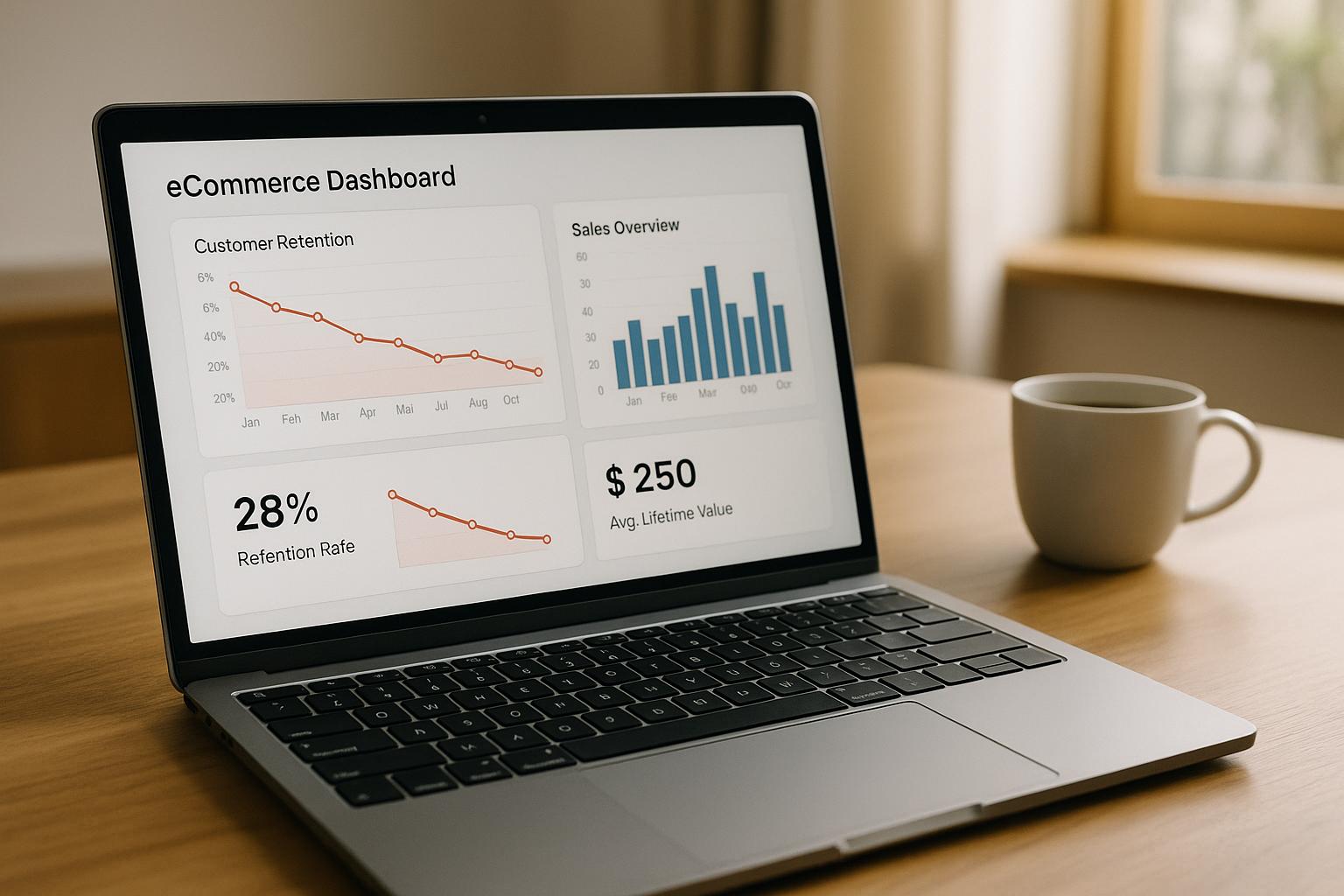
Churn is one of the biggest challenges in eCommerce, directly impacting Customer Lifetime Value (CLV) and profitability. It happens when customers stop buying from your business, cutting short their revenue potential. Here's the bottom line: high churn increases costs and reduces revenue, while even small improvements in retention can significantly boost profits.
Key Takeaways:
- Churn reduces CLV: Lost customers mean lost future revenue and higher acquisition costs.
- Repeat customers matter: They make up 21% of the customer base but contribute 44% of revenue.
- Retention is cheaper than acquisition: Acquiring new customers costs 5–25x more than keeping existing ones.
- Fixable causes of churn: Poor service, product issues, or bad user experiences drive most churn.
- Retention boosts profits: A 5% increase in retention can improve profits by 25%–95%.
Reducing churn isn’t just a good idea - it’s essential for sustainable growth. By focusing on better customer experiences, personalization, and loyalty programs, you can keep customers engaged and maximize their lifetime value.
Customer Retention & Churn Rate for Ecommerce (incl. template)
How Churn Costs eCommerce Businesses Money
Churn hits eCommerce businesses where it hurts the most: their bottom line. By grasping how churn translates into financial setbacks, businesses can better prioritize strategies to keep customers coming back.
Lost Revenue from Repeat Purchases
When a customer churns, you’re not just losing a single sale - you’re losing the steady stream of future purchases they might have made. Repeat customers are the backbone of many eCommerce businesses, accounting for 48% of transactions and generating three times the revenue of first-time buyers. Companies with a 40% repeat customer rate often see 50% more revenue compared to those with only 10% returning shoppers.
Here’s an example: An eCommerce company with 10,000 customers and an average order value of $100 increased its repeat purchase rate from 20% to 25%. This seemingly small change boosted revenue by 12.5%, adding $25,000 to their bottom line.
"It's cheaper to get past customers to purchase again than it is to find new customers. This is true for most businesses, especially in the crowded online ecommerce arena where ad impressions, clicks, and conversions always seem to be increasing in cost, making new customers more and more expensive to acquire."
– Richard Lazazzera, Founder of A Better Lemonade Stand
When churn happens, businesses lose not only the immediate sale but also the lifetime value that customer could have brought. This loss puts additional pressure on brands to spend more on acquiring new customers, further straining resources.
Higher Customer Acquisition Costs (CAC)
Replacing churned customers is an expensive cycle. On average, acquiring a new customer costs five to 25 times more than retaining an existing one. Between 2017 and 2022, eCommerce acquisition costs surged by 60%, with brands losing $29 upfront for every new customer acquired during that period.
A healthy eCommerce business aims for a Customer Lifetime Value (CLV) to Customer Acquisition Cost (CAC) ratio of 3:1 or better. However, high churn disrupts this balance, making it harder to achieve profitable growth. When customers leave too quickly, businesses end up spending heavily on short-lived relationships that don’t justify the acquisition costs.
These inflated costs don’t just hurt profitability - they also limit cash flow, making it harder to invest in growth opportunities.
Long-Term Effects on Business Growth
Churn doesn’t just cause immediate setbacks; its effects snowball over time. High churn disrupts cash flow, replacing reliable revenue from loyal customers with uncertainty. This instability makes it harder to plan inventory, fund new initiatives, or scale operations effectively.
Reducing churn, even by just 5%, can boost profits by anywhere from 25% to 125%.
"Focusing on building long-term, loyal relationships with customers creates a foundation for sustained business growth, customer advocacy, and a competitive edge in the market. By delivering exceptional experiences, personalized engagement, and consistent value, brands can forge deep connections that go beyond one-off transactions."
– Mark Peters, Head of Sales at Ask Phill
Ultimately, churn creates a vicious cycle. Businesses struggling with churn often lack the resources to make the improvements needed to reduce it, further limiting their potential for sustainable growth.
Main Causes of Customer Churn in eCommerce
Figuring out why customers stop buying from you is key to protecting customer lifetime value (CLV). The good news? Most reasons behind customer churn are fixable. Research shows that 67% of customers leave due to a bad experience, and 85% of churn is caused by poor service, not price or product. This means customers aren’t necessarily leaving for cheaper options - they’re leaving because something went wrong.
Here’s a breakdown of common churn factors and their impact on eCommerce businesses:
The stakes are high. A single bad experience can drive one in three customers to leave, and after two or three bad interactions, 92% will abandon the company altogether. What’s worse, most unhappy customers don’t even complain - only 1 in 26 will voice their concerns. The rest simply vanish, taking their future purchases (and your CLV) with them. And once they’re gone, 91% of those who churn won’t return.
Interestingly, price isn’t the main factor. Customers who perceive value in their experience are 2.6 times more likely to stay loyal. This underscores the importance of focusing on the experience rather than just discounts or promotions.
Here’s the silver lining: these issues can be addressed. Companies using predictive analytics can cut churn by up to 15%. Plus, investing in customer experience pays off - 58% of consumers are willing to spend more for a great experience. For luxury services, some customers are even prepared to pay up to 18% more.
sbb-itb-d7b5115
How to Reduce Churn and Increase CLV
Now that we've looked at what drives customers away, let’s shift gears and focus on keeping them engaged. Below are strategies designed to address the root causes of churn while building stronger connections that can boost customer lifetime value (CLV).
Better Customer Experience Through Personalization
Personalization isn’t just a buzzword - it’s a game-changer. A whopping 77% of consumers prefer brands that offer tailored services and experiences, and 66% expect companies to understand their unique needs. Even better, personalization delivers a strong return on investment, generating $20 for every $1 spent. High-growth brands, in fact, see 40% more revenue coming from personalization efforts.
Here’s another stat to consider: personalized calls to action perform 202% better than generic ones. So, where should you start? Begin by analyzing your customer touchpoints and identifying where personalization can make the most impact. Tools like CRM systems and automation software can help you gather customer data and deliver tailored options such as flexible payment methods, customized product recommendations, and personalized communication.
Take a page from Puma’s playbook. They introduced gamified overlay templates, like a spin-to-win discount feature, and saw a 231% increase in lead submissions. Similarly, MAC Cosmetics used immersive video content to highlight trending products and seasonal deals, which led to a 123.5% boost in mobile conversion rates, a 7.28% rise in average order value, and a 29% click-through rate.
Other brands have also seen great results. The Body Shop used web push notifications to inform customers about restocks and price drops, achieving a 14.4% conversion uplift and a 12X return on investment. KoRo Handels GmbH leveraged AI to recommend products during customer onboarding, tripling their purchase rates.
These personalization strategies can also serve as a foundation for loyalty programs and enhanced customer support, creating even deeper connections with your audience.
Using Loyalty Programs and Better Customer Support
Strong customer support and well-designed loyalty programs are the backbone of reducing churn and increasing CLV. Offering omnichannel support - whether through live chat, email, phone, or social media - makes it easier for customers to get help. The key? Quick, empathetic responses. Sometimes, resolving an issue promptly matters more than achieving perfection.
Loyalty programs, on the other hand, should go beyond simple discounts. Tiered programs that reward different types of engagement - like purchases, reviews, referrals, or social shares - can deliver real value. Overstock, for instance, used personalized product alert emails to achieve a 21% conversion rate, with open and click rates three and nine times higher than industry averages, respectively.
Don’t overlook the importance of onboarding content, usage tips, and proactive check-ins. Simplifying returns and refunds can also build trust, encouraging repeat purchases. Personalized updates about product launches or niche-relevant content can further strengthen customer loyalty.
"Papa John UK optimized its customer journey with personalized paths. As Kanchan Lad, Papa John UK's Senior Product Manager of Martech and Loyalty, explained, this approach enabled faster experimentation and implementation of ideas".
Funding Operational Improvements with Flexible Financing
Many of these strategies require upfront investment, whether it’s for technology, inventory, marketing, or staff training. That’s where revenue-based financing comes in. This model lets you repay a percentage of your sales, so payments adjust naturally with your business performance.
Onramp Funds specializes in this type of flexible financing for eCommerce businesses. Their approach can help you fund the personalization and loyalty initiatives mentioned earlier while keeping operational costs aligned with your revenue. With funding available within 24 hours and repayment tied to sales, you can quickly invest in tools and strategies to reduce churn. Whether it’s purchasing technology, stocking up on inventory, or launching marketing campaigns to re-engage customers, this financing model works with your revenue cycles.
Onramp Funds integrates seamlessly with major eCommerce platforms like Amazon, Shopify, BigCommerce, WooCommerce, Squarespace, Walmart Marketplace, and TikTok Shop. This allows you to connect your sales data for transparent, performance-based repayment. With fees ranging from 2–8% and no hidden costs, you can confidently plan your investments.
This flexible financing model ensures you have the resources to continuously improve customer retention, helping you build long-term relationships that drive growth.
Tracking Churn and CLV for Better Results
Understanding and tracking churn and Customer Lifetime Value (CLV) are essential for improving retention. Accurate measurement helps you pinpoint which strategies are working and where adjustments are needed. But the real key lies in knowing which metrics to track and how to use them effectively.
Key Metrics for Tracking Churn and CLV
The customer churn rate measures the percentage of customers who stop purchasing within a specific period. It’s simple to calculate and serves as an early indicator of retention issues. Reviewing churn on a monthly or quarterly basis ensures you stay ahead of potential problems.
Customer retention rate, on the other hand, flips the perspective. It shows how many customers continue to engage with your business, helping you focus on loyalty rather than loss. While retention rates vary by industry, SaaS companies typically aim for a monthly retention rate of 95% or higher.
Net Promoter Score (NPS) gauges customer loyalty by asking a straightforward question: “How likely are you to recommend us to a friend?” A score of 60 or above is considered strong. For example, Apple consistently achieves customer satisfaction (CSAT) scores above 90% after Genius Bar appointments.
Customer Lifetime Value (CLV) estimates the total revenue a customer generates over their relationship with your business. Though calculating CLV can be complex, it’s invaluable for guiding budget and investment decisions. A healthy CLV to Customer Acquisition Cost (CAC) ratio is typically 3:1 or better.
Repeat purchase rate highlights the percentage of customers making a second purchase. While the average across industries is 28.2%, it varies widely. For instance, Warby Parker reports a 75% likelihood of a third purchase among customers who make a second one.
Customer Satisfaction Score (CSAT) provides immediate feedback on customer experiences. Sending CSAT surveys within 24 hours of an interaction ensures actionable insights. Zappos, for example, tracks CSAT after every customer service interaction, aiming for satisfaction rates above 95%.
These metrics form the foundation for effective retention strategies, enabling you to segment customers and refine your approach.
Customer Segmentation for Targeted Retention
Segmentation allows you to tailor retention strategies to specific customer groups. By categorizing customers based on factors like behavior, preferences, or purchase history, you can deliver personalized experiences that build loyalty.
Start by grouping customers into CLV tiers. High-value customers should receive premium service and proactive outreach. Medium-value customers might respond well to upselling efforts, while low-value customers could benefit from automated nurture campaigns.
Behavioral segmentation focuses on how customers interact with your brand. Frequent shoppers, seasonal buyers, and one-time purchasers all require different strategies. Sephora’s Beauty Insider program, for instance, achieves an annual repeat purchase rate of over 80% by offering personalized rewards and exclusive perks.
Demographic and geographic segmentation helps you account for regional preferences and cultural influences, which is especially useful for eCommerce businesses serving diverse markets.
Acquisition channel segmentation reveals which marketing channels attract your most valuable customers. By analyzing CLV by channel, you can optimize your marketing budget and focus on acquiring high-value customers.
Predictive analytics can also play a role. AI tools can identify at-risk customers and help you engage them before they churn. Real-time insights allow you to adjust campaigns based on customer behavior and market trends.
It’s also crucial to monitor retention inflection points - moments when customers are most likely to leave. These could include the period after a first purchase, subscription renewal times, or seasonal slowdowns. Intervening at these critical junctures can make a big difference.
Adjusting Strategies Based on Data
Once you’ve segmented your customers, use the insights to fine-tune your retention strategies. Regularly analyze the metrics to ensure your efforts align with customer needs.
Close the loop on customer feedback. For example, if you collect NPS or CSAT scores, follow up with customers who report negative experiences. American Express improved its CSAT by 10% by implementing real-time feedback loops and resolving issues immediately.
Track cohorts over time to measure the impact of your retention efforts. For instance, if you launch a loyalty program in January, compare the retention rates of customers acquired before and after the launch to gauge its success.
Conduct exit interviews or surveys to understand why customers leave. This qualitative feedback can reveal issues that numbers alone might not catch.
Segment your analysis further by demographics, acquisition channels, and value tiers. Strategies that work for high-value customers might not resonate with price-sensitive ones. Breaking down your data helps uncover patterns and refine your approach.
"If you have a good retention rate, then you don't have to work as hard to acquire customers over and over again. Positive brand interactions create a flywheel - when you give your customers a great experience, they'll come back for more and you'll get to understand them better. This customer data then allows you to build more relevant experiences." - Veronica Saha, Head of Analytics @ Zoopla
Boosting customer retention rates by just 5% can increase profits by as much as 25%. Plus, retaining existing customers is 5–25 times less expensive than acquiring new ones. These numbers highlight why investing in retention strategies is one of the smartest moves for any eCommerce business.
Conclusion: Focus on Retention to Maximize CLV
Reducing churn is one of the most effective ways to increase Customer Lifetime Value (CLV) and drive revenue growth. High churn rates cut profitable relationships short, but even a small reduction - say 5% - can lead to a significant boost in profits. This makes retention a key driver for eCommerce success.
Here’s the thing: keeping your current customers is far less expensive than finding new ones. Plus, loyal customers tend to spend more over time, creating a compounding effect on profitability. Businesses that excel in retention often rely on strategies like personalized experiences, proactive communication, and seamless post-purchase support, which, when automated, can reduce churn rates by an average of 10%.
The most effective retention strategies are driven by data. By segmenting customers based on behavior and value, you can focus your efforts where they’ll have the most impact. High-value customers might need premium perks, while at-risk customers require targeted outreach to keep them from leaving. To guide your approach, track metrics like churn rate, retention rate, repeat purchase frequency, and customer satisfaction scores. These numbers will act as your compass, showing you what’s working and where to adjust.
Retention isn’t just a strategy - it’s an investment in long-term stability. Businesses that prioritize customer relationships enjoy predictable revenue, lower marketing costs, and greater resilience during tough times. Tools like flexible financing from Onramp Funds can help support these retention efforts, ensuring your resources are put to work where they’ll deliver the highest returns.
The bottom line? Acquiring customers is only the first step. The real growth - and profit - comes from keeping them engaged and loyal. By focusing on retention, you’re not just building a customer base - you’re creating a foundation for sustainable growth and long-term success.
FAQs
How can eCommerce businesses identify and address the main causes of customer churn?
To tackle customer churn effectively, eCommerce businesses need to dive into the two main types of churn: voluntary (when customers actively decide to stop purchasing) and involuntary (caused by issues like failed payments). By studying customer behavior, purchase patterns, and engagement trends, businesses can identify which customers are at risk of leaving.
Practical steps to reduce churn include gathering customer feedback, introducing loyalty programs, and addressing any service shortcomings. Proactive measures, like sending personalized offers or friendly reminders, can also go a long way in keeping customers engaged and satisfied. These efforts not only help retain customers but also safeguard their Customer Lifetime Value (CLV), ultimately strengthening the bond between the business and its customers.
How can eCommerce businesses reduce churn and boost Customer Lifetime Value (CLV)?
Reducing churn and boosting Customer Lifetime Value (CLV) in eCommerce hinges on building customer loyalty and delivering tailored experiences. Start by introducing loyalty programs, offering special discounts, and using targeted upselling or cross-selling techniques to encourage repeat purchases. These approaches help create deeper connections with your customers.
Another key element is gathering customer feedback and acting on it. Providing outstanding customer support and crafting memorable experiences early in the customer journey can establish trust and foster loyalty. On top of that, personalized marketing and consistent communication across various channels ensure customers feel appreciated and engaged.
By focusing on these strategies, eCommerce businesses can nurture stronger customer relationships, lower churn rates, and drive long-term revenue growth. For sellers looking to scale efficiently, platforms like Onramp Funds offer tailored funding solutions to manage cash flow, fuel growth, and support retention initiatives.
Why is personalization important for retaining customers, and how can eCommerce businesses implement it effectively?
Personalization plays a crucial role in keeping customers coming back. Why? Because it makes shopping feel more relevant and engaging, which naturally builds trust and loyalty. When businesses tailor their interactions to match individual preferences, they create deeper connections that inspire repeat purchases and foster long-term relationships.
To make personalization work effectively, consider these approaches:
- Tailored product recommendations: Suggest items based on what customers have browsed or bought before.
- Targeted marketing messages: Craft campaigns that align with each customer's interests and behaviors.
- Customized shopping experiences: Offer dynamic website content or exclusive deals that feel unique to the shopper.
When done right, personalization doesn't just enhance customer satisfaction - it also drives sales and improves retention. It's a win-win for businesses aiming to grow in the competitive eCommerce space.
Related posts
Onramp Funds
Funding built around your sales
Connect your store and see what you qualify for. Repay as a percentage of sales, with no personal credit check.
Funding in as little as 24 hours.
