

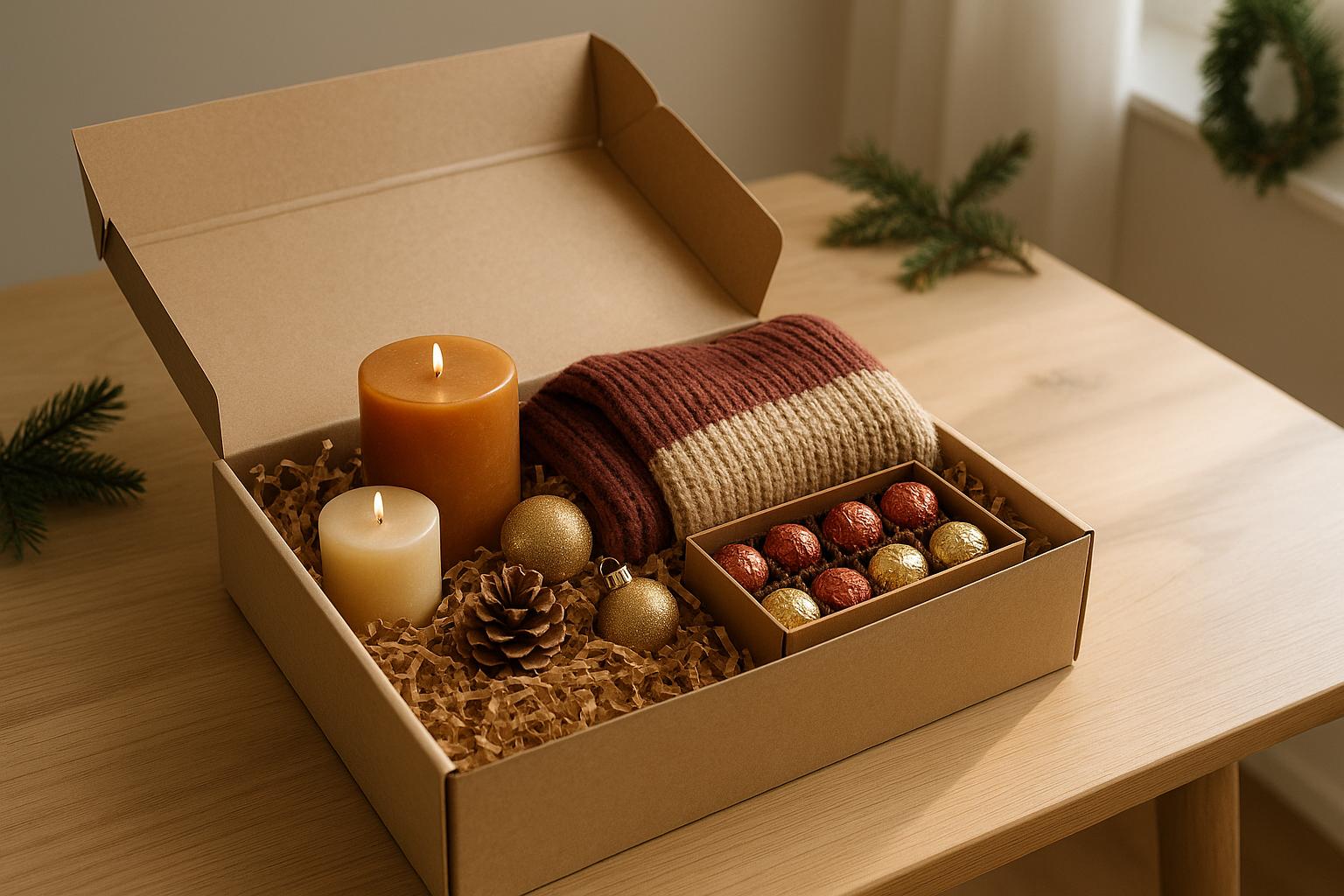
Seasonal product bundling is a smart way to boost sales, clear inventory, and attract customers by packaging products with a seasonal theme. Here's what you need to know:
- Why It Works: Bundles increase average order value, create urgency with limited-time offers, and appeal to 93% of shoppers who prefer BOGO deals.
- How to Start: Use sales data and trends to identify seasonal opportunities. Pair frequently bought items or abandoned products to create practical bundles.
- Types of Bundles: Options include themed bundles (holiday-specific), value bundles (discounted sets), and clearance bundles (move slow inventory).
- Key Benefits: Seasonal bundles can grow sales by up to 30%, improve inventory turnover, and attract new customers with sample bundles.
- Pro Tip: Tools like Google Trends and Pinterest Predicts help spot seasonal trends, while financing options like Onramp Funds ensure you’re stocked up for demand spikes.
Quick Tip: Start planning early - 50% of shoppers begin holiday shopping by October. Seasonal bundling is your chance to stand out and maximize revenue during peak periods.
Shopify product bundles & fulfillment tips for peak season
How to Identify and Plan for Seasonal Opportunities
Creating successful seasonal bundles starts with understanding your customers' needs and timing your offerings just right. By analyzing data and trends, you can uncover the best opportunities for seasonal success.
Research Seasonal Trends and Customer Behavior
Dive into your historical sales data to uncover patterns that can guide your seasonal strategies. For example, you might notice a surge in skincare product sales in January as customers embrace New Year’s resolutions or a spike in outdoor gear purchases in March as spring approaches [4]. These insights reveal what works best during specific times of the year.
Tools like Google Trends can provide real-time insights into shifts in consumer interest. For instance, you might identify when searches for "winter skincare routine" begin to climb [5]. Another valuable resource is Pinterest Predicts, which highlights emerging trends before they hit the mainstream [4].
Keep in mind that regional differences can influence seasonal preferences. A back-to-school campaign might thrive in August across much of the U.S., but varying school start dates in some areas may require adjustments. Additionally, paying attention to local events, holidays, and global celebrations can help you fine-tune your approach [4].
To stay organized, create a marketing calendar that outlines key events and holidays. Use this tool to plan bundle launches and align them with customer demand.
Choose Products for Seasonal Bundles
Effective seasonal bundles solve specific customer needs at just the right time. Start by analyzing purchase behavior to uncover items that are frequently bought together [7]. Your eCommerce platform’s analytics can help you identify these patterns.
It’s also worth looking at products that are frequently abandoned in shopping carts [6]. Bundling these items with complementary products can make them more appealing. For example, if a standalone product often gets left behind, pairing it with a related item might encourage customers to complete the purchase.
Take a page from Amazon’s playbook, which uses algorithms to suggest logical bundles like BBQ kits paired with charcoal and lighters [6]. While you may not have access to such advanced tools, you can manually review your sales data to identify complementary pairings. Historical sales records can also reveal which combinations perform well, offering clues for future bundles [7].
For inspiration, look at industry trends and add your own spin to meet specific customer needs. Brands like Nike combine AI recommendations with human expertise to suggest complementary products that enhance the shopping experience [8].
Match Bundles with Seasonal Themes
Once you’ve selected your products, align them with seasonal themes to make your bundles more appealing. For example, a Valentine’s Day bundle should feel romantic, while a summer-themed bundle might evoke fun and adventure [1].
Visual presentation matters, so use festive colors and graphics that match the season. Think red and pink for Valentine’s Day, pastel tones for Easter, or warm oranges and browns for fall. These small touches can grab attention and create a stronger connection with your audience [1].
Take inspiration from brands like Alaya Naturals, which craft stories around seasonal needs and use packaging that doubles as a keepsake [1][9]. A holiday tin or a tote bag with seasonal designs can add value and make the bundle feel special.
Adding limited-time offers or "special edition" labels can also create urgency and drive sales [1]. For instance, Little Sleepies bundles baby onesies with matching pajamas and gowns to create gift-ready sets. Their attractive packaging makes the purchase both convenient and appealing [9][1].
Don’t forget to consider geography when promoting seasonal bundles. Local climates and traditions can significantly impact how your offers resonate. Use data like purchase history, browsing behavior, and demographics to tailor your bundles. For example, a bundle designed for college students might look very different from one aimed at busy parents, even if both target the same season [9].
Types of Seasonal Product Bundles and Their Benefits
Seasonal bundling strategies can be a powerful way to boost sales, clear out inventory, and introduce new products. Each approach has its own perks, depending on whether you're aiming to capitalize on seasonal demand, manage stock, or drive customer engagement.
Common Seasonal Bundling Methods
- Themed Bundles focus on specific seasonal events or holidays. For instance, Colorescience offers Valentine’s Day beauty bundles[2], and Christmas-themed home decor bundles might include a prelit tree, ornaments, and string lights[10]. These bundles resonate with customers by aligning with their seasonal needs.
- Value Bundles emphasize savings and convenience. HiSmile saw over 80% of orders bundled, quadrupling their average cart size[12]. Similarly, Bath & Body Works often uses BOGO deals on seasonal scents to attract budget-conscious shoppers while quickly moving inventory[11].
- Pure Bundles package items exclusively together, meaning they’re not sold separately. Harry’s, for example, combines a razor handle with extra blades and shaving cream, offering a complete set while addressing slower-moving products[11].
- Mixed Bundles give customers the option to buy items individually or as part of a bundle. Glossier’s "Skincare Edit" lets shoppers choose between curated combinations or standalone products, catering to a range of preferences[11].
- Promotional Bundles create urgency with limited-time discounts. Amazon frequently offers discounted bundles with countdown timers during seasonal sales[2]. Similarly, Pai Skincare uses limited edition bundles to launch products and boost sales during slower periods[2].
- Inventory Clearance Bundles combine slower-selling items at discounted rates to free up space. Vesta Sheets, for example, offers clearance bundles with multiple linen pieces, helping to reduce warehouse stock while giving customers a deal[11].
- Sample Bundles encourage customers to try new products. These are especially effective for beauty and food brands, allowing customers to explore and discover items they might not have tried otherwise, fostering loyalty in the process.
Comparison Table: Bundling Strategy Benefits
Choosing the right bundling strategy depends on your business goals. Whether you're looking to increase average order value, manage inventory, or introduce new products, tailoring your approach can make your seasonal campaigns more impactful.
sbb-itb-d7b5115
How to Execute and Promote Seasonal Bundles
With your seasonal strategy in place, success hinges on getting the pricing right, promoting effectively, and managing inventory smartly.
Price and Add Value to Bundles
Pricing your bundles is a balancing act. You want to attract customers with a deal that feels worthwhile while still protecting your profit margins. The goal is to hit that "sweet spot" where shoppers feel they're getting a great deal.
One approach is fixed discount pricing, which offers a set dollar amount off the combined price of individual items. For instance, if a skincare bundle normally costs $85 when purchased separately, you could offer it for $65, saving customers $20. Another option is percentage discount pricing, where you apply a percentage discount - say, 25% off the total value.
For broader appeal, consider tiered pricing. Offer multiple versions of your bundle, such as a basic option for $39, a premium one for $69, and a deluxe version for $99. This allows shoppers to choose what suits them best while potentially boosting your average order value.
Seasonal bundles are often about clearing inventory quickly, so it's worth benchmarking your pricing against competitors to ensure your offer stands out.
Once pricing is locked in, the focus shifts to promoting your bundles to the right audience.
Market and Promote Seasonal Bundles
Timing is everything when it comes to promotion. Start early with pre-launch teasers via email, social media, or push notifications to build anticipation. Highlight the launch date and use countdown timers to create urgency. These timers can boost conversions by 23% [14] - place them prominently on your website and in marketing emails.
Social media contests and giveaways are another effective way to generate buzz. For example, you could host a campaign where participants tag friends, share posts, or use a specific hashtag to enter. Offering one of your seasonal bundles as the prize not only draws attention but also showcases your products. This strategy resonates strongly, as 67% of shoppers are influenced by seasonal promotions during the holidays [13].
Collaborating with influencers is another smart move. Provide them with discount codes or exclusive offers to share with their followers. This approach taps into their loyal audiences and builds trust through their endorsements.
Encourage customers to share their experiences with your products by posting photos or videos. User-generated content feels authentic and can amplify your campaign's reach. Consider creating a dedicated hashtag to make it easier to track and share these posts.
Gift guides are also a great tool. Curate lists like "Gifts Under $50" or "Holiday Must-Haves" and feature them on your website, social media, and in emails. These guides make shopping easier for your customers and help them discover your bundles.
Finally, retargeting ads can help you reconnect with potential buyers. Use dynamic ads to remind shoppers about items they've viewed or left in their carts. Pair these with seasonal discounts to encourage purchases, especially since half of consumers start their holiday shopping before Halloween [14].
Manage Inventory During Seasonal Peaks
Proper inventory management is essential to keep your campaigns running smoothly, especially when demand spikes unexpectedly. Start with accurate demand forecasting by analyzing past sales data to identify trends and bestsellers from previous seasons.
Maintain a safety stock to handle sudden demand increases or supply chain hiccups. Calculate reorder points based on typical demand and lead times. Real-time inventory tracking systems can also prevent overselling and ensure timely restocking.
Building strong relationships with suppliers is crucial. Communicate your seasonal needs early and consider working with multiple suppliers to ensure a steady inventory flow.
For many businesses, cash flow can be a hurdle during seasonal peaks. Seasonal inventory often requires a big upfront investment before the sales roll in. This is where revenue-based financing can be a game-changer. Onramp Funds, for instance, offers fast, equity-free financing with flexible repayment terms. You can secure funding within 24 hours and repay based on a percentage of your sales, easing the financial strain of stocking up for peak periods.
To optimize costs, you might adopt a hybrid inventory approach. Use a just-in-time (JIT) strategy for less popular products to minimize carrying costs, while keeping larger stocks of your seasonal bestsellers. This way, you’re ready for demand without tying up too much capital.
Throughout your campaigns, keep an eye on metrics like stock turnover rates and order fulfillment times. These indicators can help you spot potential issues early, allowing you to adjust before they become bigger problems.
Measure Success and Improve Future Strategies
When your campaign wraps up, it's time to dive into the data. Analyzing what worked and what didn’t will help you fine-tune your approach for the next round.
Key Metrics for Bundle Performance
Seasonal bundles can be a goldmine, but only if you know how to measure their success. Keep an eye on these key metrics: sales volume, revenue from bundles compared to standalone sales, and average order value. These figures will help you identify which strategies hit the mark and which fell short.
Conversion rates are another critical measure. On average, industries see a conversion rate of around 3% [15]. If your bundle conversions are lagging, it may be time to rethink your approach. Similarly, profitability matters just as much as sales volume. Calculate your bundle profit margins by subtracting the costs of the items from the selling price. A popular bundle that barely turns a profit isn’t sustainable in the long run.
Also, compare the customer acquisition cost (CAC) for bundle campaigns with that of individual products. When paired with customer lifetime value (CLV), this comparison can show whether bundle buyers are worth the investment over time.
Lastly, track inventory turnover and return rates. If you’re seeing higher-than-average returns (e-commerce stores typically average a 30% return rate [16]), it could signal that your bundles aren’t meeting customer expectations. For every $1 billion in sales, returns cost retailers about $165 million [15][16], so keeping this under control is essential. For product-based companies, the average retention rate is 63% [16], making repeat purchase rates another valuable metric to monitor.
Use Customer Feedback and Sales Data
Customer feedback and sales trends are treasure troves of insight. Reviews, surveys, and direct feedback can tell you whether your bundles are hitting the mark. If customers frequently mention that certain items don’t pair well together, it’s time to rethink those combinations.
Dive into your sales data to uncover patterns. For example, look at shopping cart activity or abandoned cart items to identify products that naturally go together. Cross-selling trends can also reveal unexpected but effective bundle combinations. Segmenting your customers based on their buying habits can take this a step further. For instance, loyal customers might gravitate toward premium bundles, while first-time buyers could favor simpler, entry-level options.
A great example of this is Harper Wilde, a loungewear brand. They curated bra bundles tailored to customer preferences, using email campaigns with personalized recommendations based on browsing history [9]. Social listening tools can also provide real-time insights from social media and review platforms, helping you catch trends or issues that surveys might miss.
Improve Strategies for Future Seasons
Armed with customer insights and sales data, you can refine your strategy for upcoming seasons. After each campaign, review your performance metrics - sales, fulfillment efficiency, and customer feedback - to spot trends and areas for improvement. Document what worked, what didn’t, and what adjustments to make next time.
Consider A/B testing to experiment with different product combinations, pricing, and promotions. Use historical data, market trends, and external factors to update your demand forecasts regularly, ensuring you’re prepared for what’s ahead.
Operational metrics like order accuracy, delivery times, and inventory turnover rates should also be monitored throughout each campaign. These can help you quickly identify and fix any bottlenecks that could derail your efforts.
Scaling your seasonal strategy often requires a financial boost. Revenue-based financing options, like those from Onramp Funds, can provide the capital you need without giving up equity. With repayments tied to sales performance, this type of financing allows you to stock up for peak seasons while staying financially flexible.
Finally, staying competitive means keeping a pulse on seasonal trends. Monitor industry reports, competitor moves, and emerging customer preferences. Regular feedback loops - like customer check-ins and strategy reviews - can help you adapt quickly to the ever-changing e-commerce landscape.
Conclusion
Seasonal product bundling is a powerful way to boost revenue and manage inventory effectively. By grouping products around holidays, events, or seasonal needs, businesses can see an increase in average order value - sometimes by as much as 30% [3].
Take CURATEUR's "Home for the Holidays Set" or Alaya Naturals' winter bundle as examples. These show how timing and relevance play a key role in creating bundles that resonate with customers [17][9].
Leveraging data is critical. Metrics like conversion rates, inventory turnover, and customer feedback help fine-tune bundling strategies for future seasons. This data-driven approach ensures you're making smart decisions that align with both customer preferences and financial goals.
Of course, preparing for seasonal demand often requires upfront investment. That’s where revenue-based financing from Onramp Funds comes in. Unlike traditional loans, repayments are tied to a percentage of sales, giving sellers the flexibility they need to stock up without added pressure.
While eCommerce trends constantly shift, one thing stays the same: seasonal shopping patterns. Customers will always look for holiday gifts, back-to-school essentials, and items that fit changing weather and activities. By refining your bundling strategies and ensuring financial flexibility, you can consistently capitalize on these predictable demand spikes.
FAQs
When is the best time to launch seasonal product bundles in the US?
The best time to roll out seasonal product bundles in the US is during peak shopping months like November and December. These months are jam-packed with major shopping events, including Black Friday, Cyber Monday, and the holiday season, when consumer spending hits its highest levels. It’s a golden opportunity to boost sales and attract eager buyers.
To stay ahead, start planning as early as October. This gives you enough time to prepare your bundles and ensure everything is ready for the holiday rush. Although January and February tend to be quieter, they still offer chances for targeted promotions, such as New Year discounts or Valentine’s Day-themed bundles. Aligning your launches with these key periods allows you to tap into seasonal shopping habits and meet customer demand effectively.
How can I create seasonal product bundles that resonate with different regional holidays and preferences?
To make your seasonal bundles stand out across different regions, start by diving into local holidays, traditions, and customer preferences. Design your bundles to reflect these regional themes - think Thanksgiving-inspired bundles for the U.S. or Christmas sets featuring items that are popular locally.
Keep an eye on consumer trends and tweak your offerings to fit seasonal demands. Including regionally relevant products or flavors can make your bundles feel more thoughtful and appealing. On top of that, make sure to clearly communicate the value of your bundles and time your marketing efforts to align with specific holidays. This can significantly boost interest and sales.
When your product bundles align with local festivities and preferences, they feel more personal. This not only strengthens customer connections but also helps sustain demand throughout the year.
How can I manage inventory effectively to handle demand spikes during seasonal bundling campaigns?
To manage demand spikes during seasonal bundling campaigns, start by reviewing historical sales data. This helps you predict demand more accurately and set target inventory levels. Be sure to consider lead times, safety stock, and any potential changes in customer behavior. Establish clear reorder points to avoid the headaches of overstocking or running out of stock.
Using real-time inventory tracking and predictive tools can give you an edge in staying ahead of demand while keeping excess stock under control. It's also smart to align your marketing efforts with your inventory levels. This ensures you can meet customer demand without creating imbalances during peak seasons. With solid preparation and flexibility, you can keep operations running smoothly and boost profits during your seasonal campaigns.
Related Blog Posts
Onramp Funds
Funding built around your sales
Connect your store and see what you qualify for. Repay as a percentage of sales, with no personal credit check.
Funding in as little as 24 hours.
